AUTOINSIGHT
REAL-TIME AERODYNAMIC INFERENCE
Turn simulation and test data into real-time aerodynamic inference — explore thousands of design variants in seconds and compress vehicle program timelines.
AUTOINSIGHT
OVERVIEW
AUTOINSIGHT
ADVANTAGES
Open Infrastructure
Ingests historical test data and simulation data from existing solvers, including STAR-CCM+, Fluent, Flow360 and more, without forcing teams into a closed ecosystem. Allowing OEMs to apply AI across programs, groups, and toolchains — regardless of which solver each team runs — while retaining full ownership and portability of their data and models.
Real-Time Inference
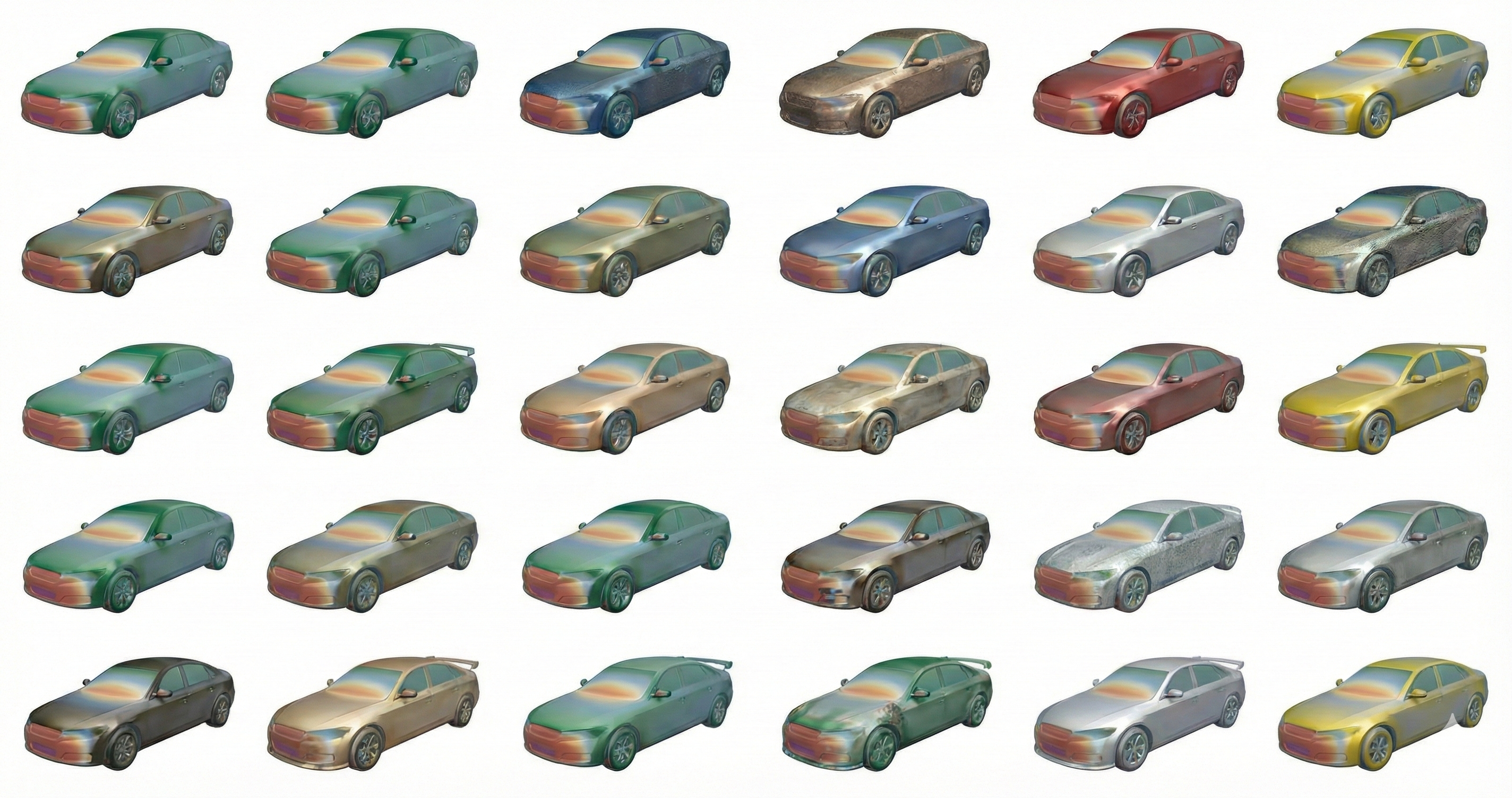
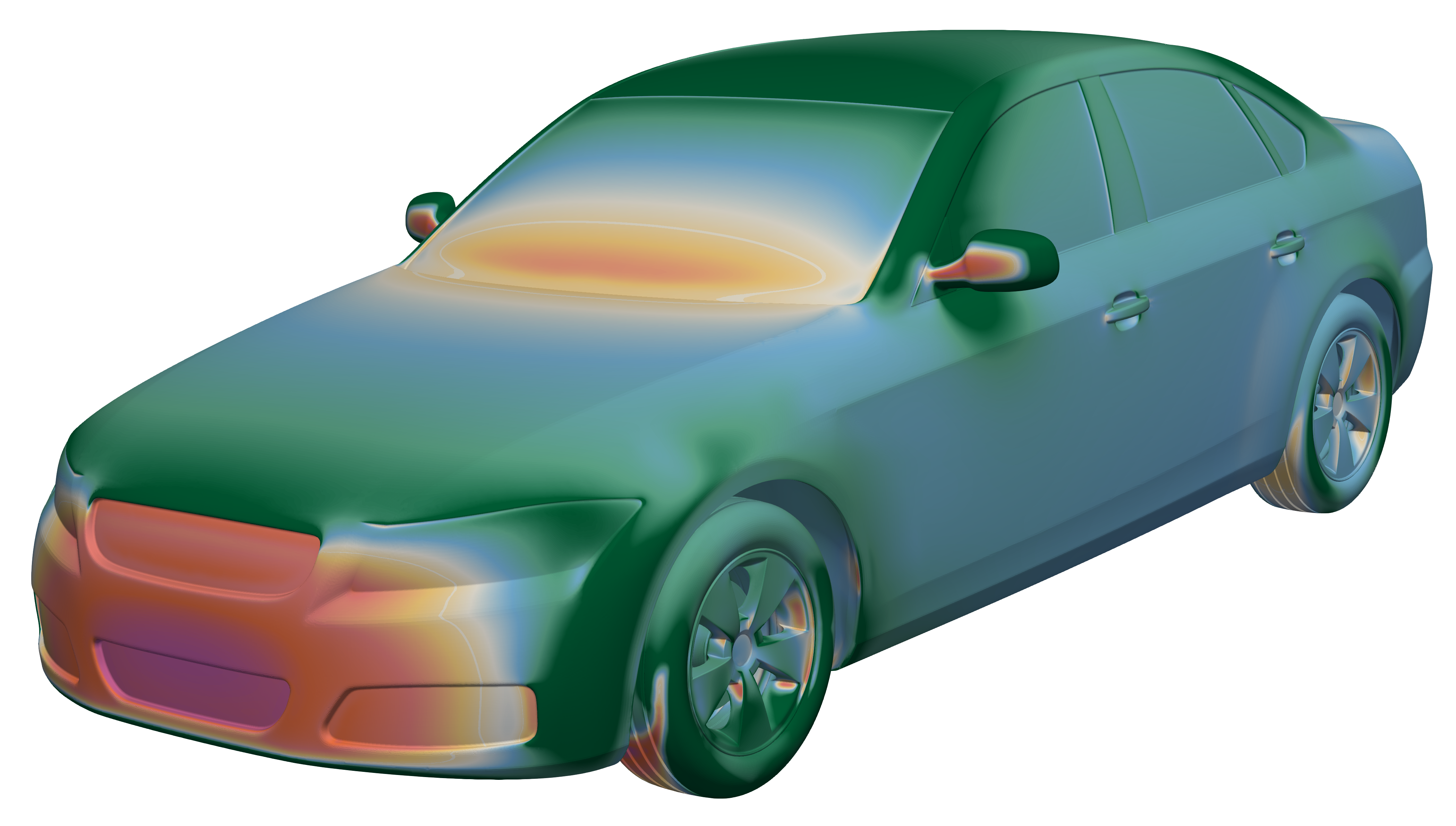
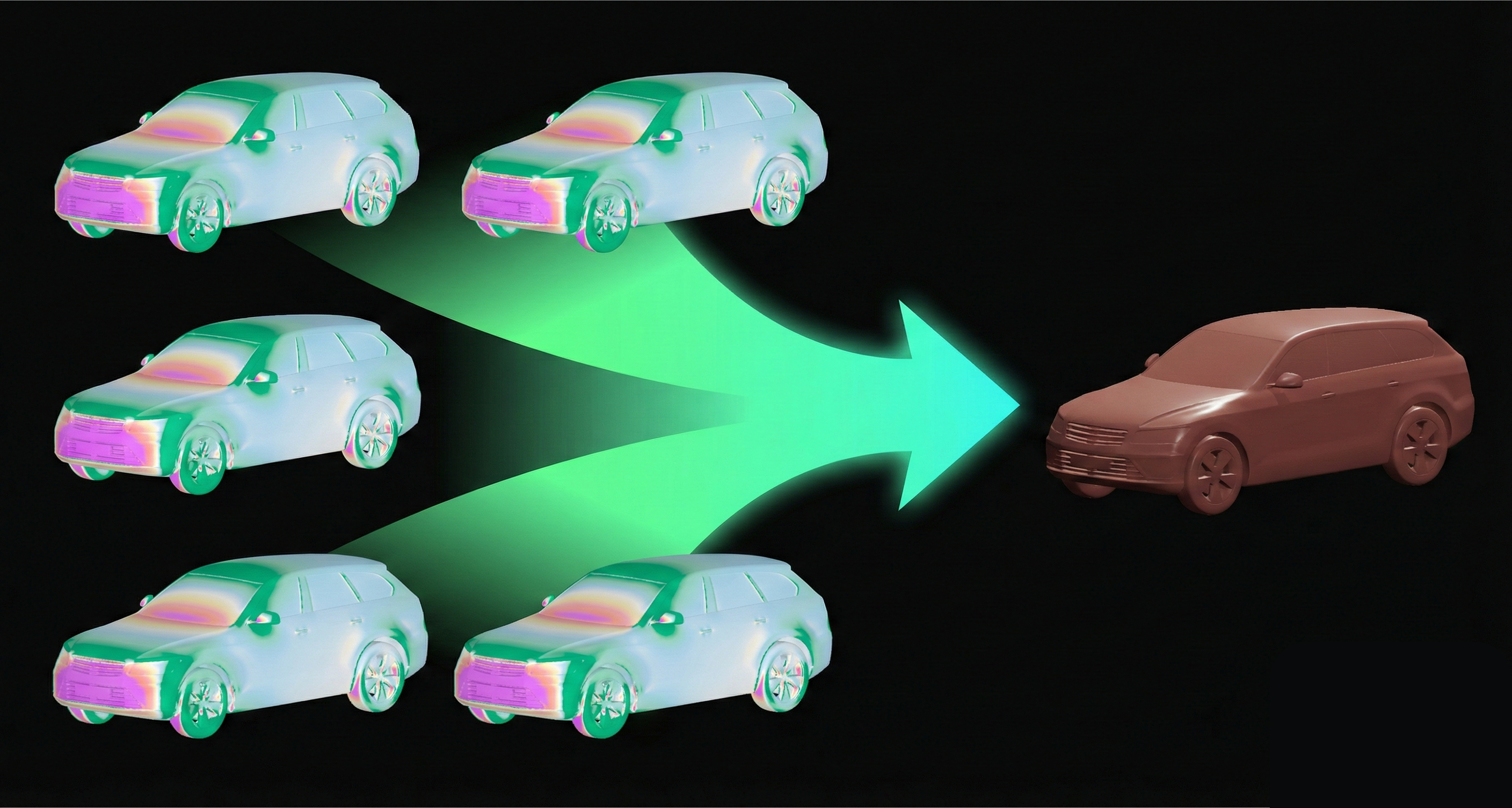
Delivers immediate aerodynamic predictions for design changes, enabling rapid trade studies and exploration without waiting on full simulation turnaround. High-fidelity CFD remains in the loop for validation, but iteration speed is no longer gated by batch runs.
Closed-Loop Learning
Continuously improves as new simulation and test data is added. Each validation run feeds back into the model, keeping predictions aligned with the evolving design space and extending the usefulness of AI across early exploration and later-stage refinement.
WHO
BENEFITS

Designers
Explore hundreds of shape variants in a single session. See aerodynamic impact on every design change in seconds — no ticket, no simulation queue, no waiting.

Aerodynamicists & Simulation Engineers
Stop spending 80% of your time on routine reruns. AutoInsight handles the volume exploration so you can focus on novel physics, edge cases, and the work that actually requires your expertise.

Engineering Leadership
Compress vehicle program timelines by removing the iteration bottleneck. Every simulation your team has ever run becomes an asset that accelerates every future program.
BRING REAL-TIME AERODYNAMIC
FEEDBACK INTO YOUR DESIGN WORKFLOW
Learn how AutoInsight links simulation data, real-time inference, and high-fidelity CFD into a closed-loop aerodynamic intelligence workflow.
AUTOINSIGHT
FEATURES
AutoInsight provides a complete aerodynamic intelligence platform, combining AI training, real-time inference, geometry interaction, and CFD validation into a single workflow. The platform is built as open infrastructure that fits into existing simulation environments and stays relevant as designs and vehicle platforms evolve.
Open Data Ingestion
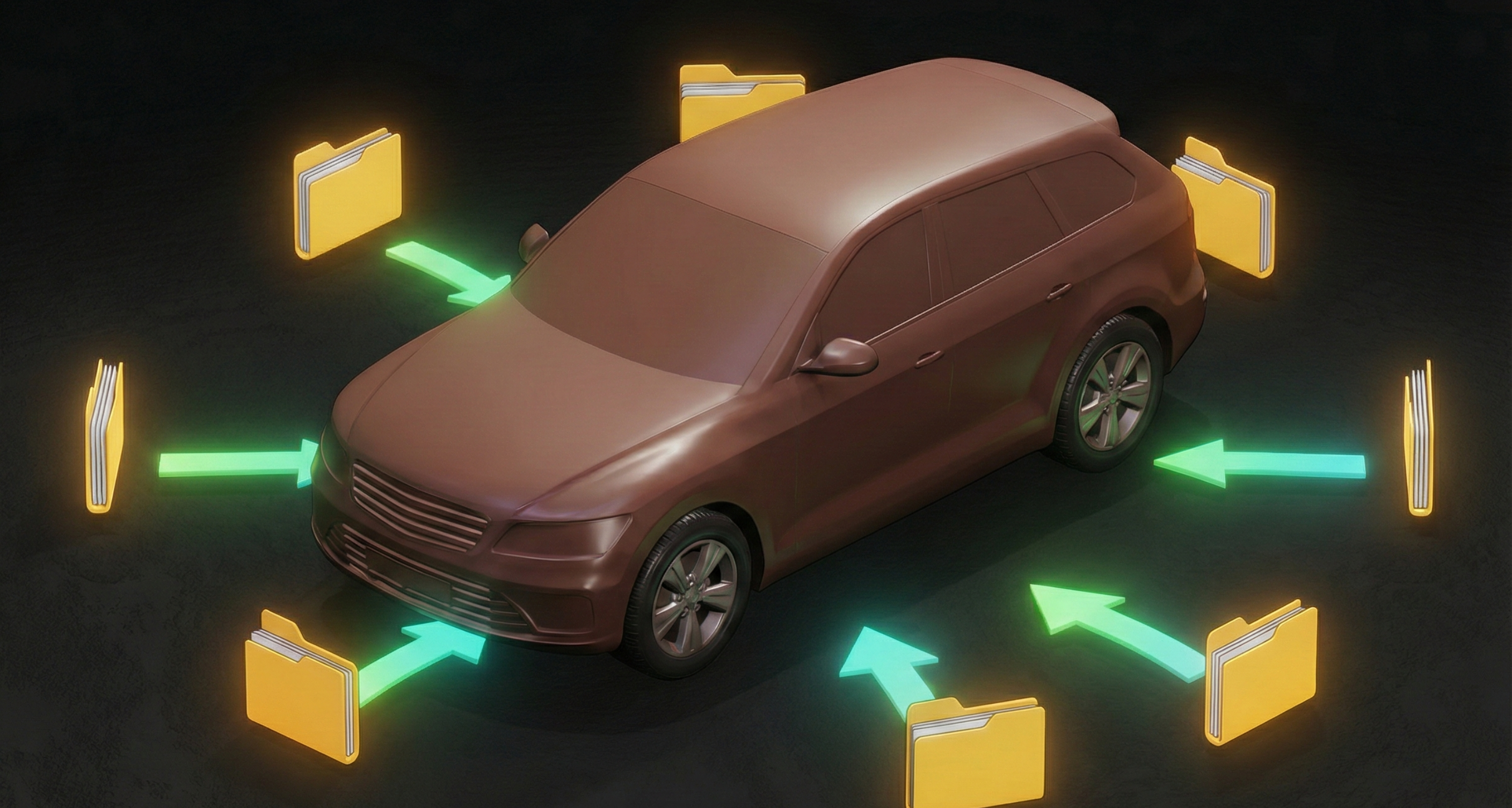
Ingests historical simulation and test data from existing workflows and solvers, including STAR-CCM+, Fluent, Flow360 and more. Supported formats include STL, VTK, VTP, and CSV. Prior programs and current studies can be brought into the platform without restructuring existing pipelines or toolchains.
AI Model Training
Provides a dedicated workflow for training and managing AI models as new data is added. The platform ships with a pre-trained foundation model to deliver immediate value, then improves incrementally as customer-specific simulation and test data is incorporated over time.
Real-Time Aerodynamic Inference
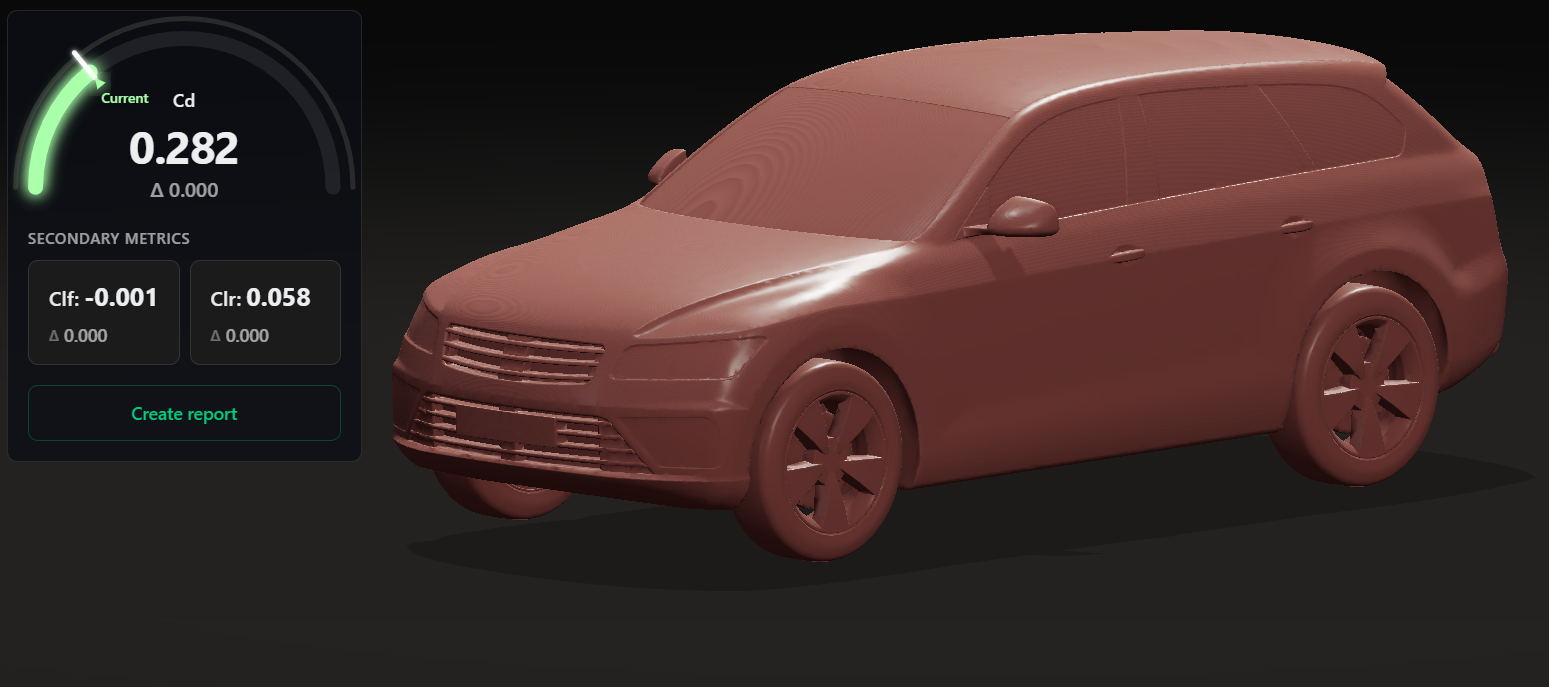
Delivers immediate predictions for drag, downforce, and other aerodynamic metrics as geometry is modified. This enables rapid trade studies and early screening of design changes before committing to full CFD runs or wind tunnel sessions.
Interactive Geometry Morphing
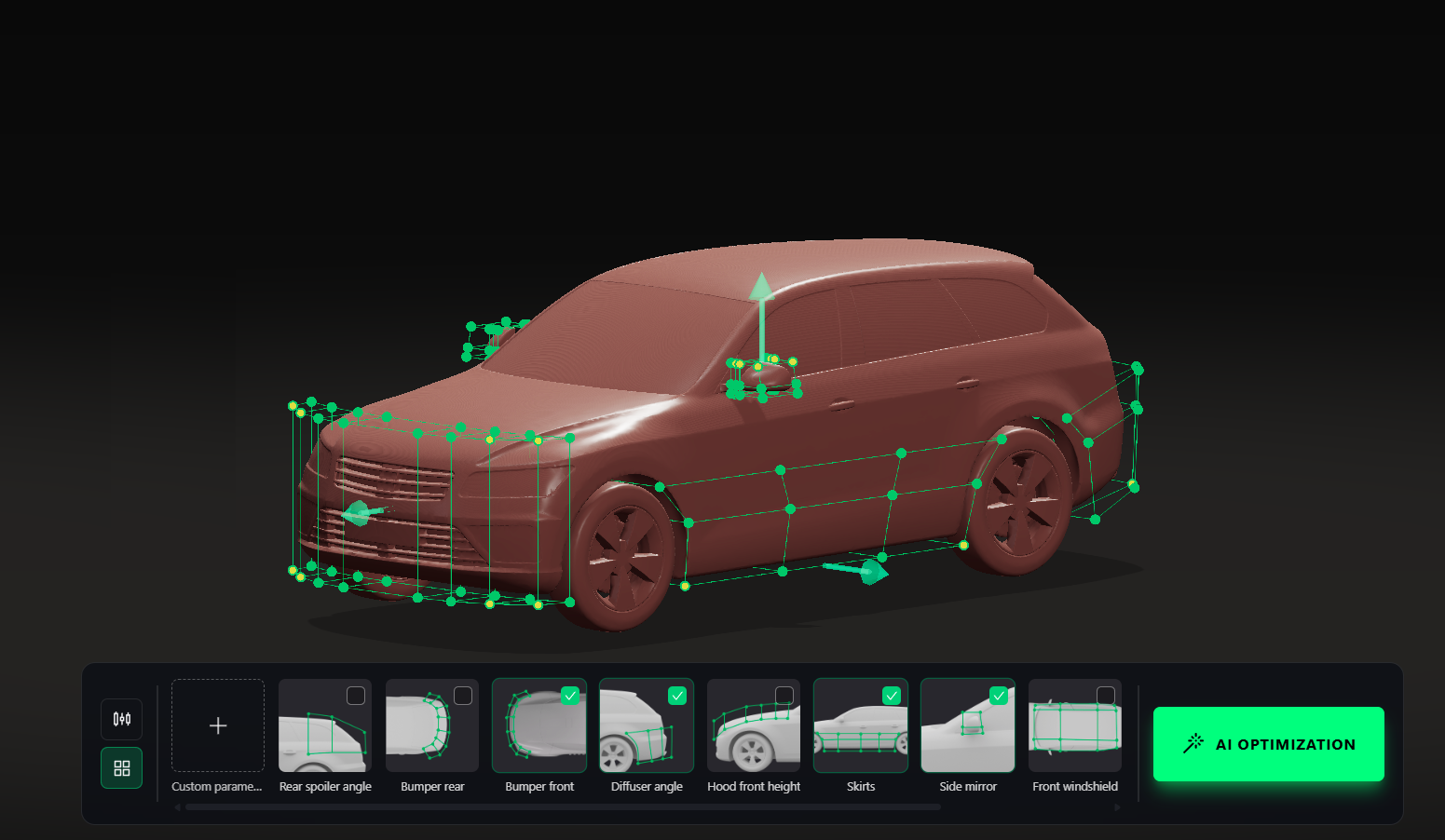
Supports localized shape changes directly on vehicle geometry using 25 prebuilt morphing boxes. Engineers define parametric bounds for each region, and AutoInsight shows predicted aerodynamic impact in real time as parameters are adjusted.
Response Surface Visualization
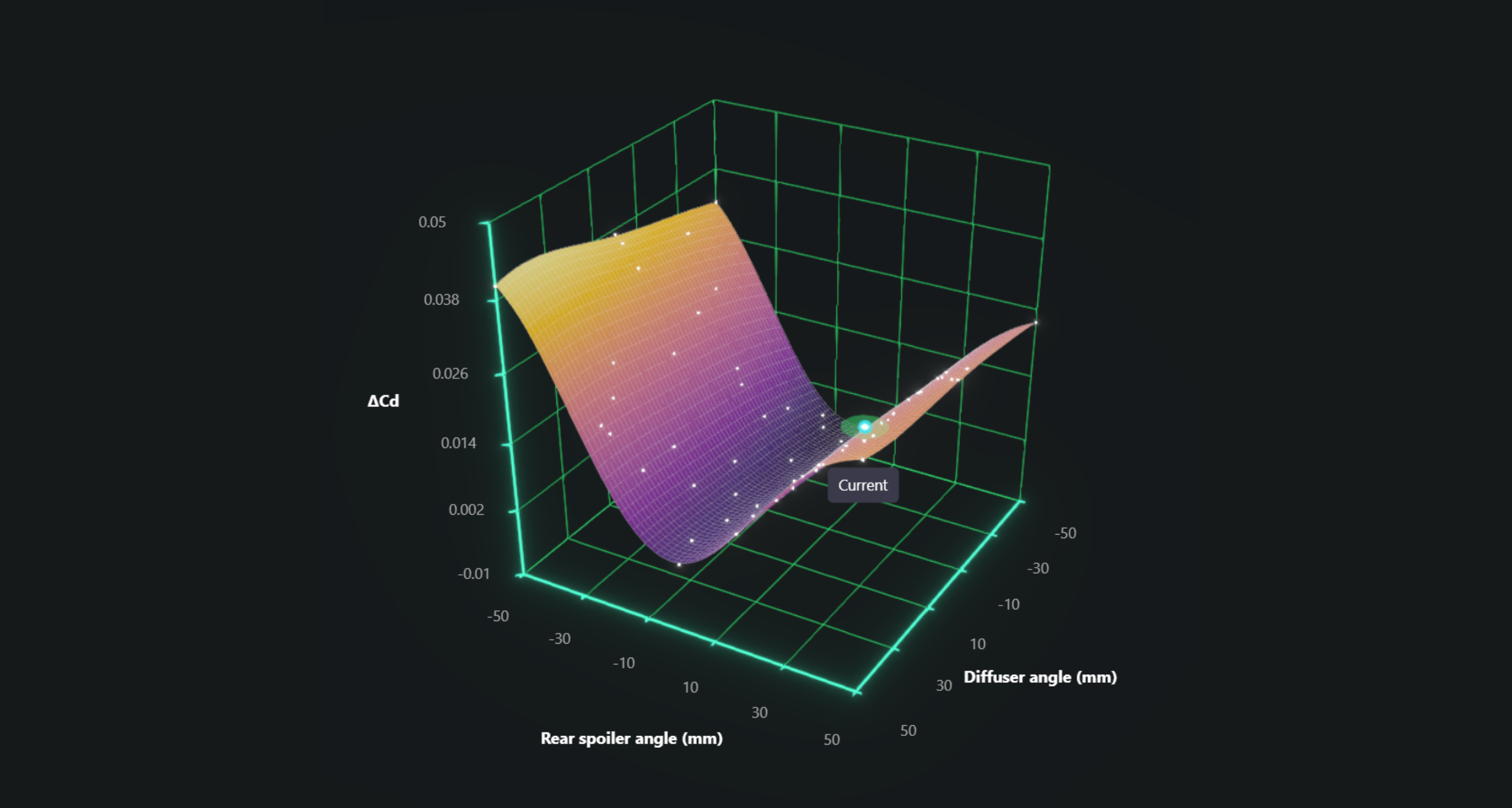
Builds response surfaces over selected design parameters to expose performance trends and tradeoffs — such as drag vs. rear overhang length or cooling flow vs. front-end closure. Promising regions can be identified quickly and used to prioritize which variants go to full validation.
Simulation Data Management
Organizes geometry variants, simulation results, and prediction outputs in a single environment. This preserves institutional knowledge across iterations, model years, and programs — making historical data a reusable asset instead of an archived file.
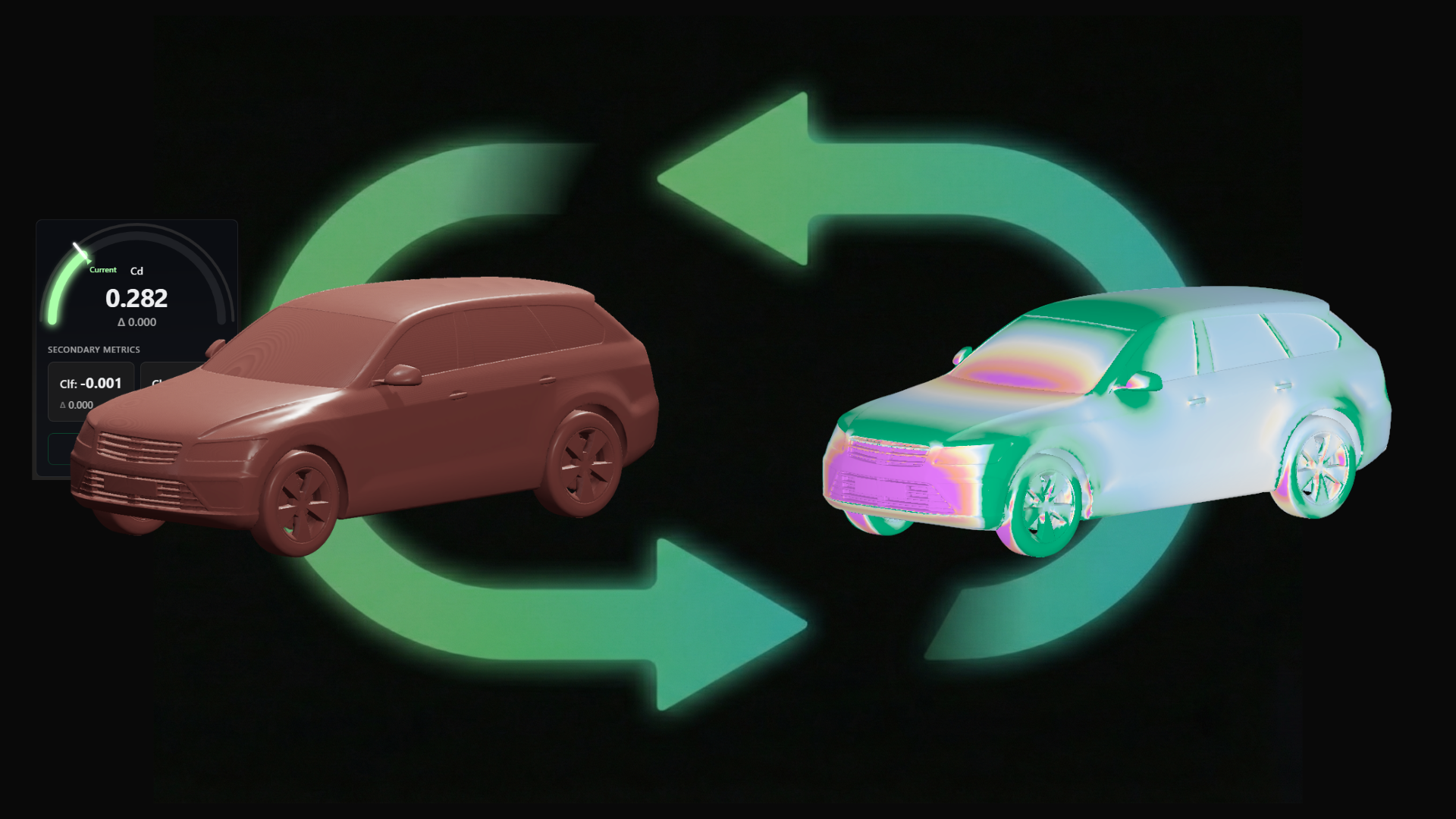
Closed-Loop CFD Workflow
Connects AI-driven exploration with high-fidelity CFD in a continuous loop. Candidate designs can be sent for validation, and resulting simulation data feeds back into model training to keep predictions aligned with the evolving design space.